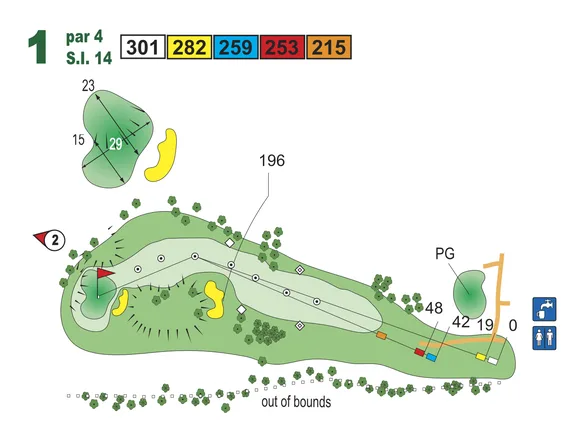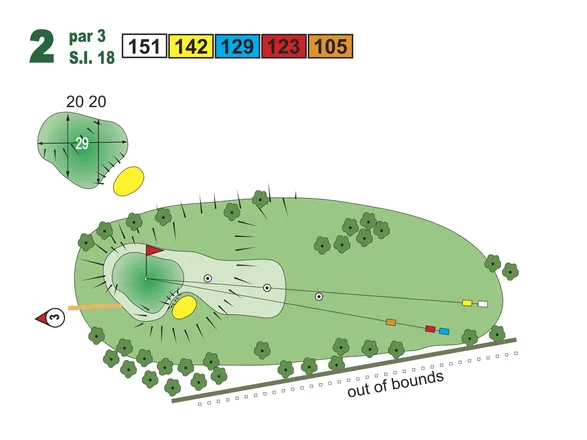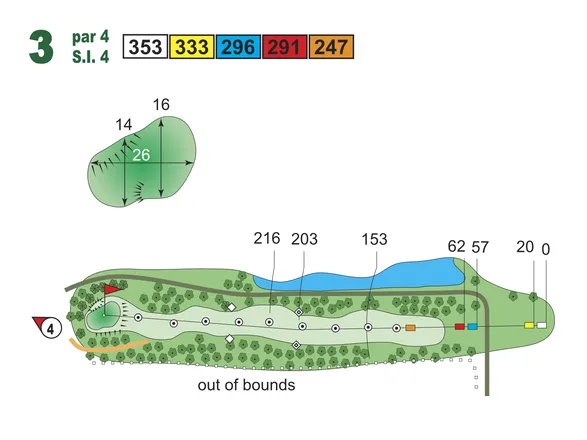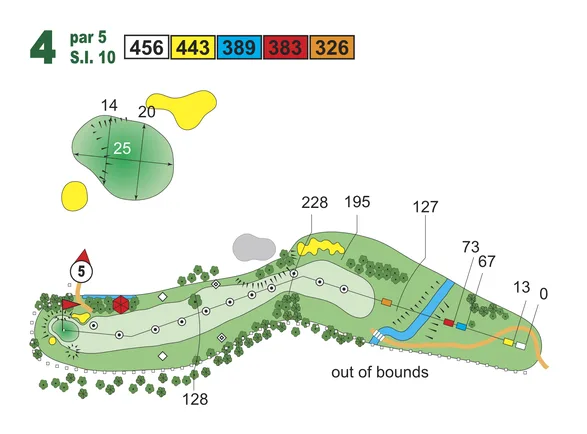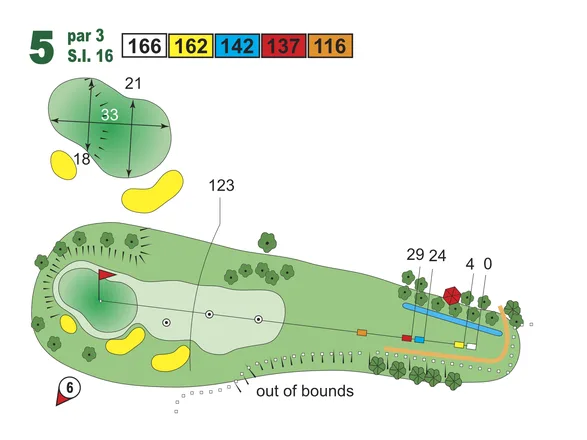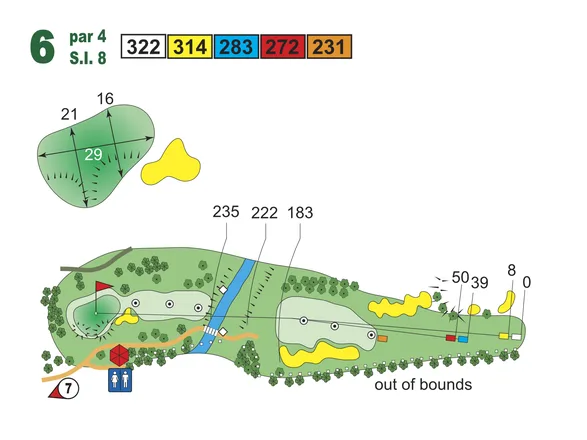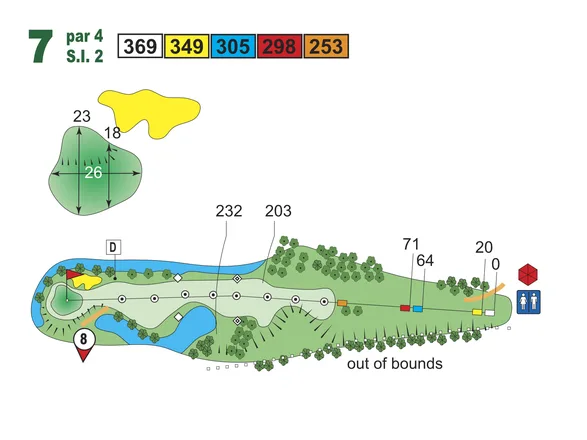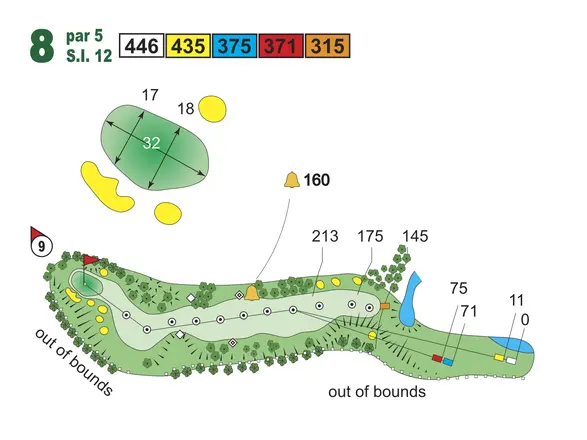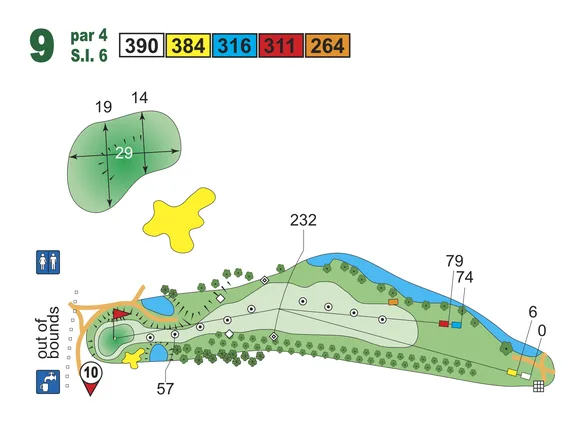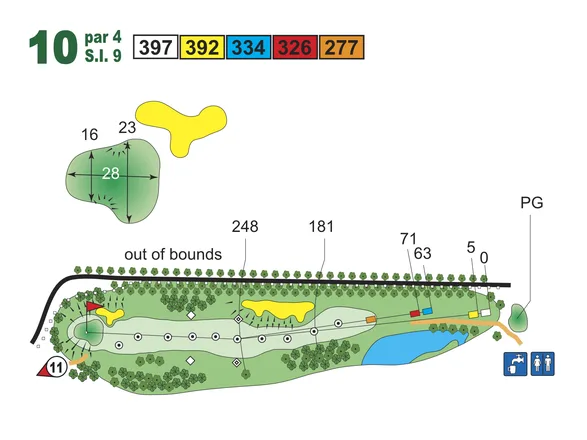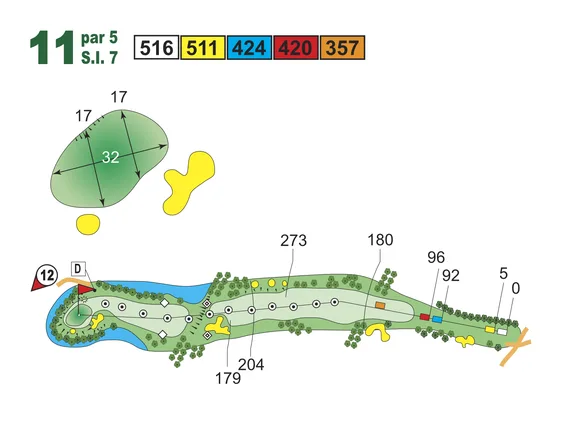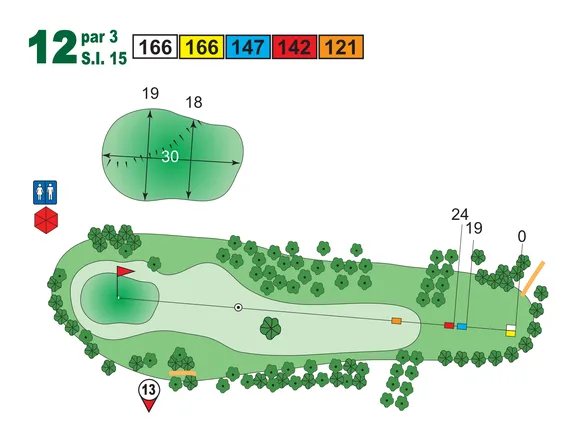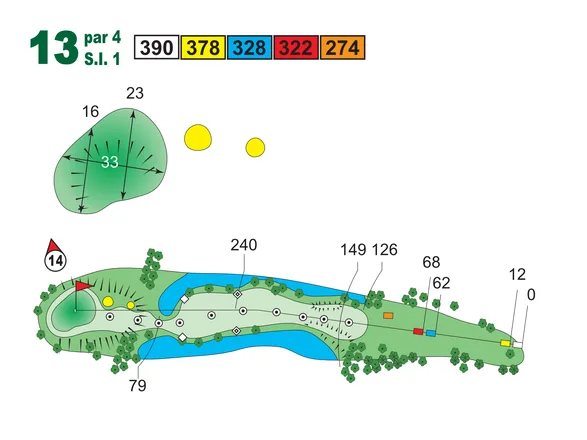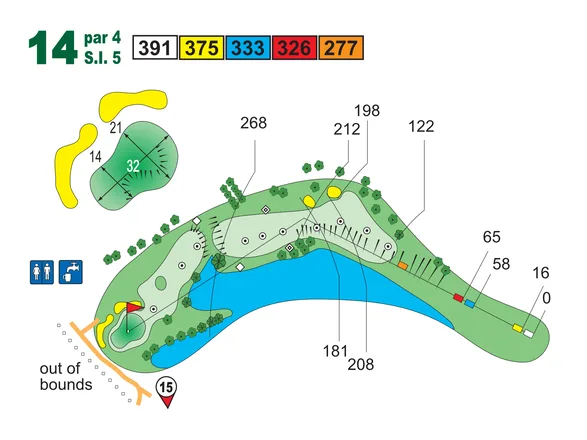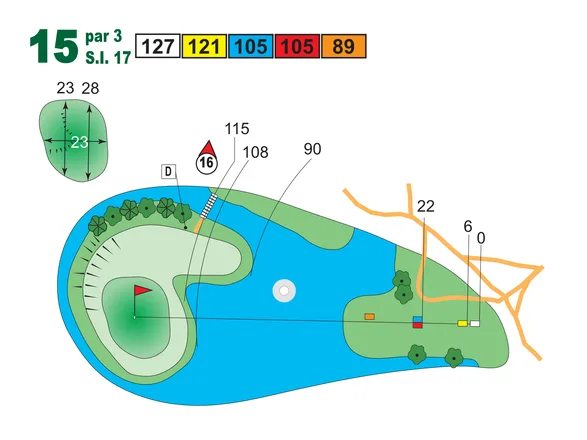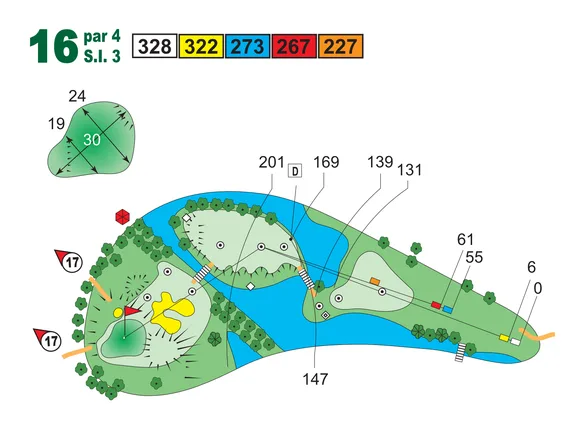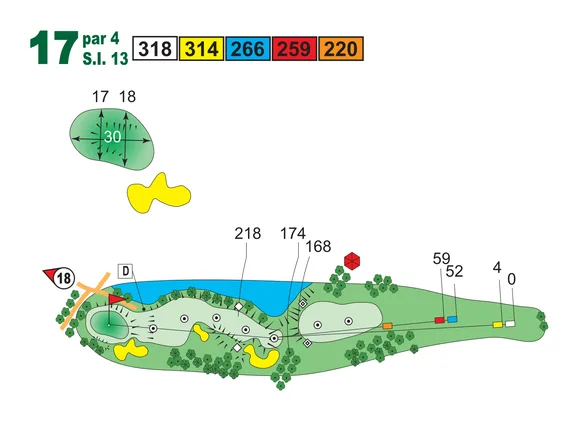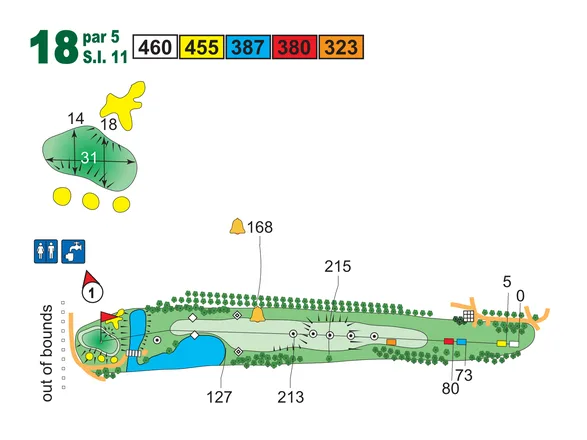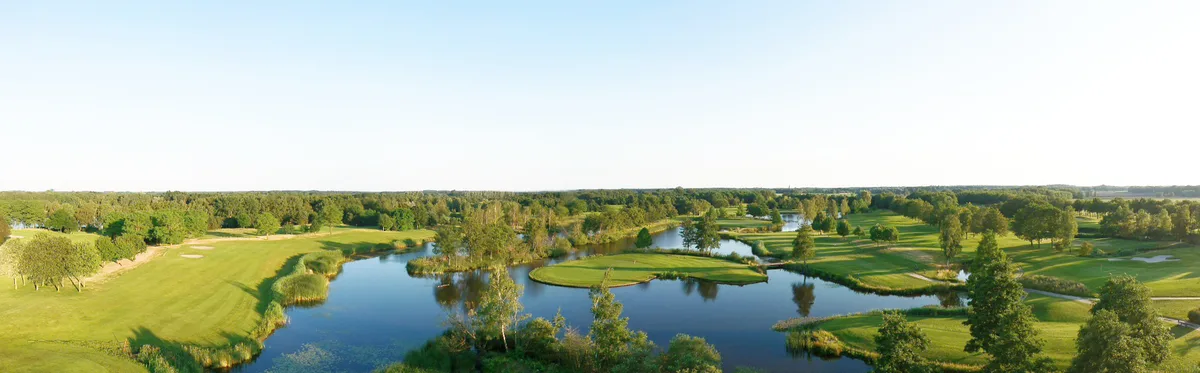
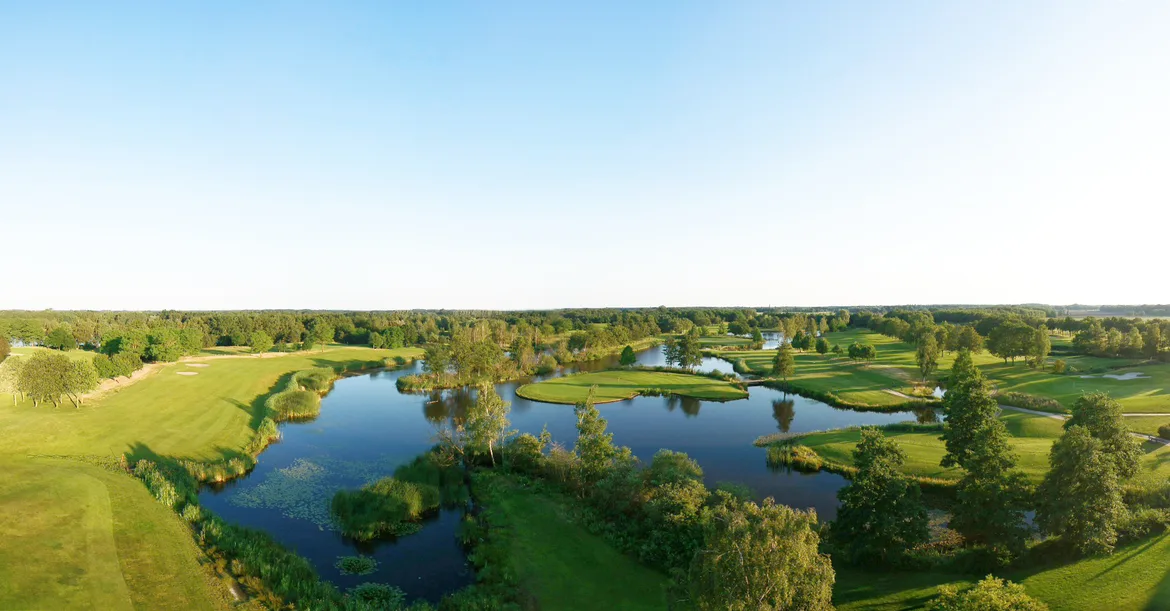
Welcome to the Championship Course of De Peelse Golf, one of the most beautiful golf courses in the Netherlands. The 18-hole parkland course was designed by golf course architect Alan Rijks and has proudly held official NGF A status since 1996. Thanks to its challenging design, the championship golf course is regularly used by the NGF for national and regional tournaments.

"On this course, you have to keep thinking carefully and I found that very nice in particular."
"The course is particularly challenging and varied."
"Beautiful course in northern Limburg, well maintained and lots of water."
"Water comes into play well on several holes and the greens are undulating."
Whether you come to train, enjoy or perform - our Championship Course offers top-level challenge and playing pleasure for every player.
Click here for the men's and women's 18- and 9-hole course handicap tables of the Championship Course. You will also find the course rating (CR) and slope rating (SR) in these tables:
--Temporary local rule hole 6 (effective 3 June 2026)--.
If the bunker, left of the green on hole 6, is under water and dropping IN the bunker - not closer to the hole - is practically impossible, the following action may be taken:
Out of bounds
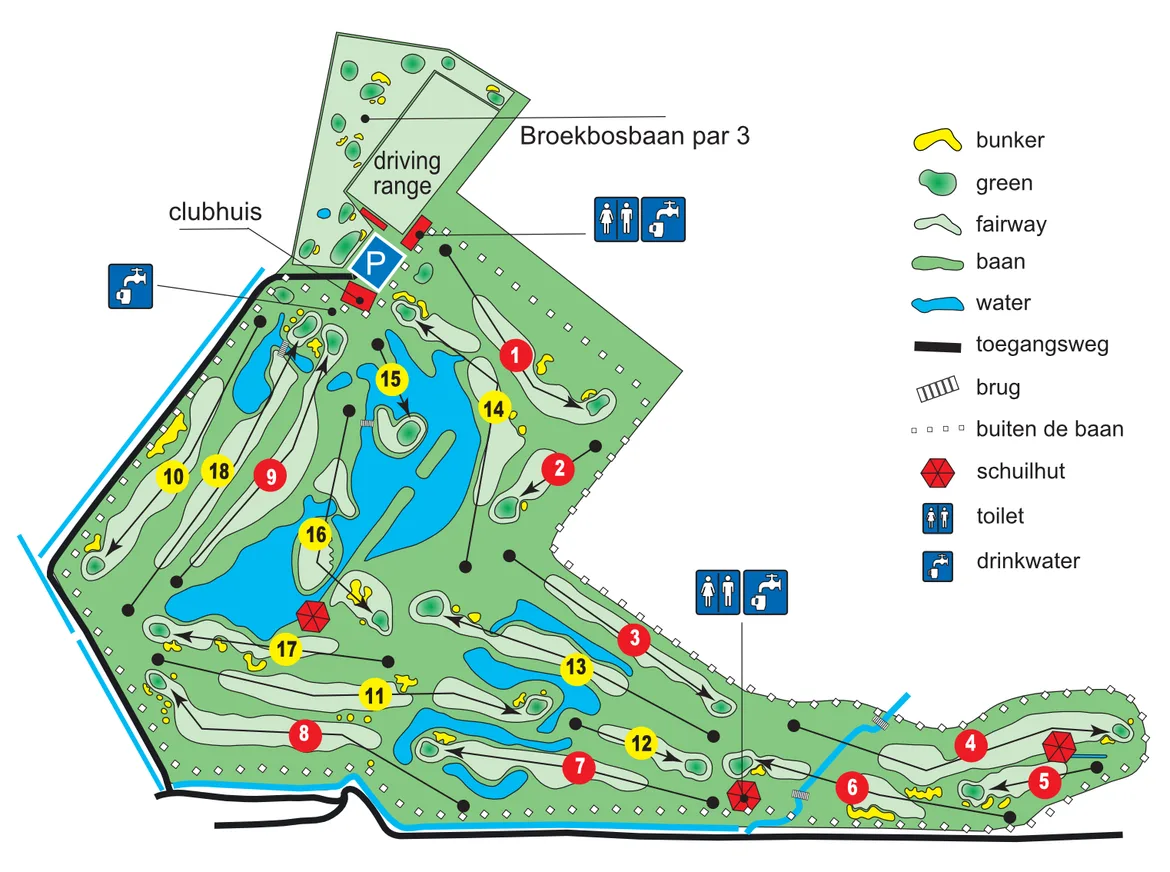
The boundary of out of bounds is marked with white posts. On the left side of holes 2 and 3, out of bounds is indicated by the fence.
Hazards
If the ball lies in the red hazard around the greens of holes 7, 11, 15, 17 and the fairway island of 16, or it is known or practically certain that the ball not found therein has come to rest, the player has the following options with a penalty stroke:
1. take relief under Rule 17.1
2. as an additional option, the player may drop the original ball or another ball into the drop zone to the right in front of the green. This drop zone is a drop zone as referred to in Rule 14.3.
Ground Under Repair (GIB).
Ground under repair, defined by any area surrounded by blue posts with a green head or white lines and a post with a green head, is a prohibited playing area. In the event of an obstruction by this prohibited playing area, it is mandatory to take relief without penalty according to Rule 16.1f. Ground under repair, defined by blue posts, the player may take relief without penalty according to Rule 16.1b.
Staked trees
Staked trees in the general area constitute a prohibited playing area.
When a player's ball is in the general area and it is on or against such a tree or such a tree is an obstruction to the player's position or space for the intended swing, the player must take relief from the obstruction according to Rule 16.1f.
Fixed Obstacles
All poles on the course are considered fixed obstacles from which taking relief without penalty is permitted under Rule 16.1.
Hole 15
This local rule relates only to the front of the green:
When a player does not know whether his ball is in the yellow hazard, the player may play a provisional ball under Rule 18.3, modified as follows:
When playing a provisional ball, the player may use the stroke and distance avoidance option (see Rule 17.1d(1) or the straight back take relief option (see Rule 17.1d(2)).
If the player has played a provisional ball under this rule, he or she may not use any other evasion options under Rule 17.1 in relation to the original ball.
In deciding when the provisional ball becomes the ball in play or whether it should be given up, Rule 18.3c(2) and 18.3c(3) apply except:
When the original ball is found within 3 minutes in the yellow hazard. Then the player may choose to:
When the original ball is not found within the 3-minute search period or it is known or practically certain to be in the yellow hazard. Then the provisional ball becomes the ball in play.
Penalty for breach of aforementioned Local Rules: General penalty (see Rule 1.3)